
It always starts the same way.
One sneeze in the meeting room, one “I’m fine, it’s just a cold” in the break area — and by Friday, half the office is coughing into their coffee mugs.
Every winter, UK businesses lose millions of workdays to flu and seasonal illnesses. Beyond the obvious inconvenience, sick days disrupt projects, delay deadlines, and quietly drain productivity.
At Spring Cleaning TW, we believe professional cleaning isn’t just about keeping a space tidy — it’s about keeping teams healthy and businesses running smoothly.
In this guide, we’ll show you how to protect your workplace this winter: where germs hide, how to keep them under control, and why prevention is far cheaper than lost productivity.
Why Winter Hits Workplaces Hard
Closed windows, recycled air, and the great British habit of “toughing it out” — winter creates the perfect storm for workplace illness.
When heating systems dry out the air, viruses survive longer on surfaces. Shared desks, break rooms, and door handles become hotspots for cross-contamination.
According to the UK Health Security Agency, influenza and respiratory infections can spike by over 40% during peak winter months. It’s not just an HR problem — it’s an operational one. Sick employees mean slower output, missed deadlines, and reduced morale.
So where does professional office cleaning come in? Right at the heart of prevention.
The Hidden Hotspots You Probably Overlook
Desks and Shared Equipment
Your keyboard likely has more bacteria than a toilet seat — not exactly comforting news for anyone working in a “hot-desking” environment.
When multiple employees share workstations, bacteria and viruses pass invisibly between users. Daily wipe-downs, keyboard disinfection, and shared sanitising wipes are no longer optional; they’re essential.
At minimum, desks, phones, and computer mice should be disinfected at the end of each day, especially during flu season.
Kitchens and Break Rooms
Let’s talk about that communal sponge.
It looks innocent enough — until you realise it’s probably been used to wipe ten different mugs and the microwave door handle. Break rooms are social hubs, but also germ magnets.
Professional cleaners use targeted disinfectants to sanitise surfaces that domestic products simply miss. And no offence to the office “clean freak,” but bleach wipes once a week just don’t cut it.
Meeting Rooms and Door Handles
Think of how many hands touch a meeting room door in a single morning. Add coffee cups, remote controls, and shared pens, and you’ve got the perfect breeding ground for germs.
Regular surface disinfection and door-handle rotations make a tangible difference.
💡 Quick Fact: The average employee touches their face 23 times per hour — so yes, surface hygiene matters more than we think.
Cleaning Strategies That Actually Work
Daily vs. Deep Cleaning — Knowing the Difference
Daily surface cleaning keeps your office visually tidy, but it’s not the same as true disinfection.
Professional deep cleaning involves high-contact disinfection cycles, proper dwell times for sanitisers, and vacuuming for improved air quality.
At Spring Cleaning TW, our winter cleaning plans focus on high-traffic areas — desks, kitchens, and shared equipment — ensuring germs don’t get a chance to multiply overnight.
Build a Winter Hygiene Schedule
Consistency beats intensity.
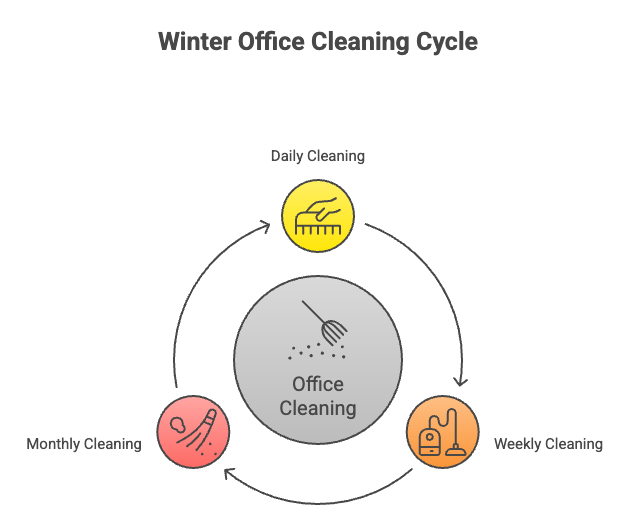
Here’s a simple winter cleaning framework to guide your office routine:
- Daily: Desks, kitchen counters, door handles, phones, and light switches
- Weekly: Shared equipment, fridges, carpets, and upholstery
- Monthly: Deep-clean ventilation systems, blinds, and windows
Regular cleaning builds invisible trust — employees feel safer, and that sense of wellbeing translates directly into better focus and performance.
Involving Your Team (and Making It Stick)
The Role of Leadership and Culture
Office hygiene isn’t just the cleaner’s job — it’s a shared responsibility.
Managers who lead by example (and send a friendly “Hygiene Highlights” email now and then) reinforce the message that health matters.
You don’t need to run a campaign — just create awareness. A quick reminder to wipe down desks or refill hand sanitisers goes a long way.
Simple Habits That Reduce Sick Days
- Keep tissues, sanitiser stations, and bins within easy reach.
- Encourage sick employees to rest and recover — not to “power through.”
- Avoid shared cups and mugs.
- Add clear but friendly signage (“Stay healthy, stay productive!”).
When employees feel that their wellbeing is valued, they tend to value their workplace in return.
The ROI of a Healthy Workplace
A healthy office isn’t just a nice-to-have — it’s a financial advantage.
Reduced absenteeism means smoother operations and fewer disruptions. Clean, fresh environments also improve first impressions for visiting clients and contribute to ESG and wellbeing goals.
One HR manager recently told us they noticed a 30% drop in sick leave after implementing a structured winter cleaning schedule. That’s not luck — that’s hygiene working as a strategy.
For more on how a clean space influences your company image, check out
👉 The Art of First Impressions: Office Cleaning and Client Perception
Ready to Winter-Proof Your Office?
Flu season doesn’t have to slow your business down.
Spring Cleaning TW helps offices across Kent and Sussex stay open, productive, and healthy — all winter long.
Let’s design your custom Winter Cleaning Plan today.
👉 Get a Free Quote and discover how we can keep your office healthy this winter.

